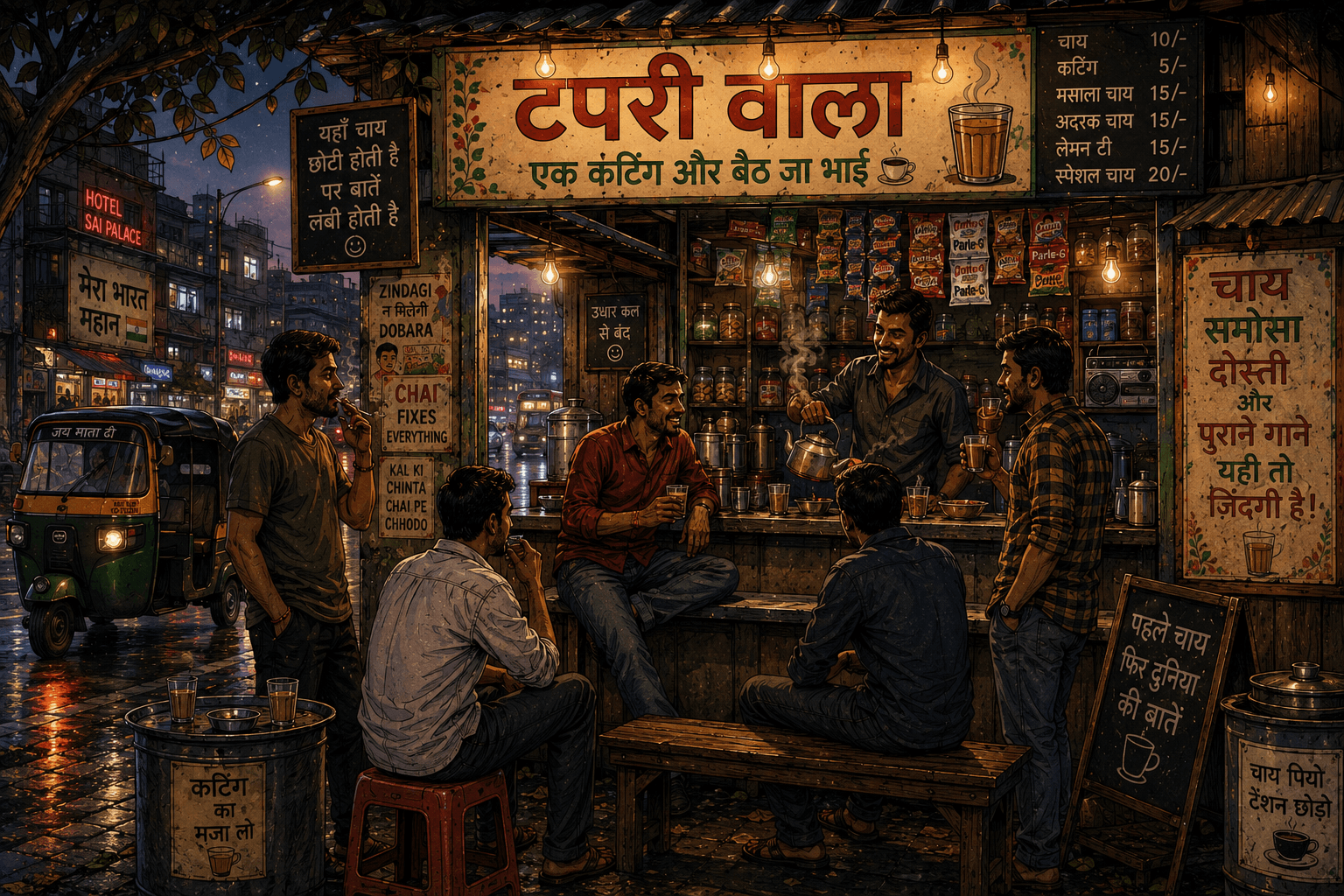
Tapri Wala — Chai, Paan Ki Tapri & 90s Nostalgia
The deck above spins the Tapri Wala cassette: a rolling mix of old Hindi songs and 90s Bollywood favourites — the kind of music that drifts out of every paan shop and chai tapri corner in India. Audio only: no video, just the cutting chai. Sit, have a cutting, and stay for the conversation.
All songs stream through YouTube's official player from a public playlist — audio only, no downloads are offered on this site.
आज की टपरी वाली शायरी
Tapri Wala Shayari
Cutting Chai
चाय की प्याली छोटी थी, बातें मगर पूरी रात की थीं, एक कटिंग में ठहर गया दिन, पता ही नहीं चला ये शुरू कब और कहाँ ख़तम हुई।
1 / 50
Tapri Pe Aaj Ki Baat
टपरी पे आज की बात
Cutting Chai
भाई एक कटिंग देना।
चीनी कम या जिंदगी जैसी?
Baat 1 / 20
About Tapri Wala & Cutting Chai Culture
Tapri Wala is an independent retro tribute to the democratic social heart of Indian street life — the roadside tea stall (*chai ki tapri*). From the narrow coastal lanes of Mumbai and Pune to the bustling office corners of Bengaluru, Kolkata, and Delhi, the tapri is the universal public living room where the city pauses, reflects, and converses.
Operating from a humble wooden counter beneath a corrugated tin awning, the tapri wala performs a timeless morning and evening alchemy. Fresh buffalo milk, crushed ginger root, cracked green cardamom, and strong granulated Assam CTC tea leaves boil continuously in a blackened saucepan. Poured from high above through a fabric strainer into thick, fluted glass tumblers, “cutting” chai is half a glass of intensely sweet, spiced tea served for a few coins. It is small by design: not to quench a thirst, but to purchase a pause — ten minutes of unhurried fellowship between commutes and shifts.
What makes the tapri extraordinary is its radical egalitarianism. Around the wooden counter, corporate professionals, auto-rickshaw drivers, college students, and municipal workers stand shoulder to shoulder on the same cracked pavement. There are no velvet ropes or reservation lists. And above the hiss of the boiler, a small transistor radio or tape player hums softly with 90s Bollywood romantic melodies, filling the street with warmth, optimism, and shared nostalgia.
Tapri Wala is built around that feeling: big dreams shared in small sips, the comforting glow of an evening bulb, and old songs that make every corner feel like home.
Keep Exploring
Stories & Street Nostalgia
Read original essays exploring the songs, traditions, and culture of the roadside stall:
90s Bollywood & the Tapri →
Why dholak-driven romantic playback belongs to the chai glass.
Cassette Culture on Indian Roads →
How magnetic audio tape transformed vehicle cabins and street stalls.
Cutting Chai Culture
In Mumbai and across India, “cutting” chai is half a glass of strong, sweet tea served for a few rupees — small by design, because the point was never the size of the cup. It is the pause it buys: a driver stretching between trips, an office worker before the 9 a.m. rush, two friends deciding everything and nothing. Cutting chai is Indian tapri culture in a glass — big dreams in small sips.
WalaVerse
Tapri Wala is part of WalaVerse, a family of retro tributes to India's everyday people. From the auto-rickshaw streets to the long highway to the roadside tapri, each Wala is a different corner of the same country — and each one keeps its own cassette playing.